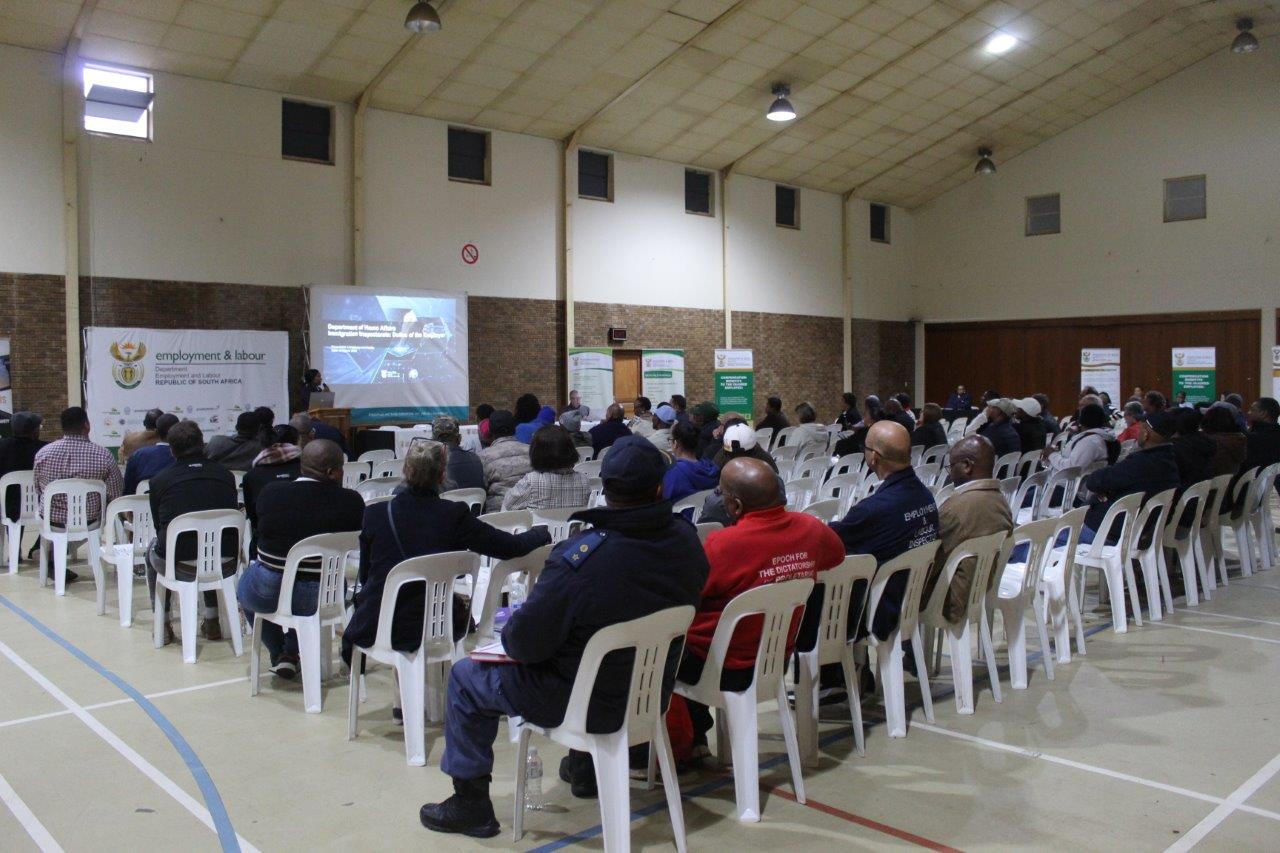
LANGEBERG MUNICIPALITY HOSTS LABOUR AND IMMIGRATION COMPLIANCE WORKSHOP FOR FARMERS AND LABOUR BROKERS
Robertson, 13 August 2026 – The Langeberg Municipality, in partnership with the Department of Employment and Labour (DEL) and the Department of Home Affairs (DHA), hosted an information and compliance workshop for farmers, agricultural employers and labour brokers to strengthen understanding of key legislative requirements relating to foreign employment, labour compliance, workplace safety and employee benefits. The workshop brought together officials from various government departments to provide practical guidance on immigration compliance, labour migration policy, occupational health and safety, compensation for workplace injuries and diseases, and Unemployment Insurance Fund (UIF) obligations. The initiative formed part of ongoing efforts to support the agricultural sector through awareness, education and collaboration.
Immigration Compliance and Employer Responsibilities
The Department of Home Affairs reminded employers that foreign nationals may only be employed if they possess valid documentation authorising them to work in South Africa. Employers were encouraged to verify passports, visas, asylum-seeker permits, and refugee permits before employment and to maintain proper records of these documents.
Officials highlighted that employers have a legal obligation to ensure that they do not employ undocumented foreign nationals or persons whose visas do not permit employment. Farmers and labour brokers were encouraged to conduct regular checks on employee documentation and retain records to demonstrate compliance. Importantly, the Department emphasised that Immigration Officers have statutory powers to enter farms, workplaces and business premises to verify compliance with the Immigration Act and investigate the employment of foreign nationals. Employers were advised that inspections may be conducted to verify documentation and assess whether foreign workers are legally employed.
National Labour Migration Policy and Legislative Developments
The Department of Employment and Labour provided an overview of South Africa's National Labour Migration Policy (NLMP) and the Employment Services Amendment Bill currently before Parliament. The policy seeks to balance labour market needs, economic growth and worker protection while promoting safe, orderly and regulated labour migration. Participants were informed of the government's efforts to strengthen labour migration governance, improve coordination between departments and enhance compliance monitoring in sectors that employ significant numbers of foreign nationals. Agriculture was identified as one of the sectors likely to be impacted by future labour migration frameworks and regulatory measures. The Department encouraged employers to remain informed about legislative developments and to ensure ongoing compliance with all labour and immigration requirements.
Unannounced Inspections and the Powers of Inspectors
One of the key messages emerging from the workshop was the significant authority granted to labour inspectors and immigration officers in terms of national legislation. Officials stressed that inspections should not be viewed as punitive measures, but rather as important tools for ensuring compliance and protecting both employers and employees.
Employers were informed that labour inspectors may enter workplaces, farms, labour broker facilities and business premises without prior notice at reasonable times to conduct inspections and assess compliance with labour legislation and occupational health and safety requirements. Inspectors may examine records, review documentation, inspect machinery and equipment, assess working conditions and conduct interviews with employers and employees. Employers are legally required to provide inspectors with reasonable assistance and access to information necessary to perform their duties. Where non-compliance or safety risks are identified, inspectors may issue improvement notices, prohibition notices or take further enforcement action as prescribed by law.
Workshop participants were encouraged to maintain accurate employment records and ensure that all statutory obligations are met, as compliance inspections may occur without prior scheduling or notification.
Workplace Health and Safety
The Occupational Health and Safety (OHS) session focused on employers' responsibilities to provide and maintain safe working environments for employees and any other persons who may be affected by workplace activities. Officials outlined the inspection process and explained the role of the Department's Inspection and Enforcement Services in monitoring compliance. The Department emphasised that workplace safety remains a shared responsibility and encouraged employers to proactively identify and address risks to prevent workplace injuries and accidents.
Compensation Fund Benefits and Injury-on-Duty Procedures
The Compensation Fund guided the Compensation for Occupational Injuries and Diseases Act (COIDA), outlining procedures for reporting workplace injuries and occupational diseases and explaining the benefits available to affected employees and their dependants. Employers received practical advice on claim registration, required documentation and common administrative errors that may delay claims. Officials encouraged prompt reporting of incidents and accurate record-keeping to ensure workers receive the support and benefits to which they are entitled.
UIF Compliance Remains Critical
The Unemployment Insurance Fund (UIF) session focused on employer obligations relating to registration, employee declarations and monthly contributions. Employers were reminded that UIF provides vital short-term relief to employees during periods of unemployment, illness, maternity leave, adoption leave or reduced working hours. Participants were encouraged to ensure that all employees are properly registered, that monthly declarations are submitted timeously and that contributions are paid before the prescribed deadlines to avoid penalties and enforcement measures.
Working Together for Compliance and Growth
The workshop demonstrated the value of collaboration between government departments, municipalities, farmers and labour brokers in promoting lawful employment practices, protecting workers' rights and supporting sustainable economic development.
Langeberg Municipality extends its appreciation to the Department of Employment and Labour, Department of Home Affairs, the agricultural stakeholders and all participants who contributed to the success of the event. Through initiatives such as these, the Municipality remains committed to supporting the agricultural sector, improving awareness of legislative requirements and fostering a compliant, productive and sustainable local economy.